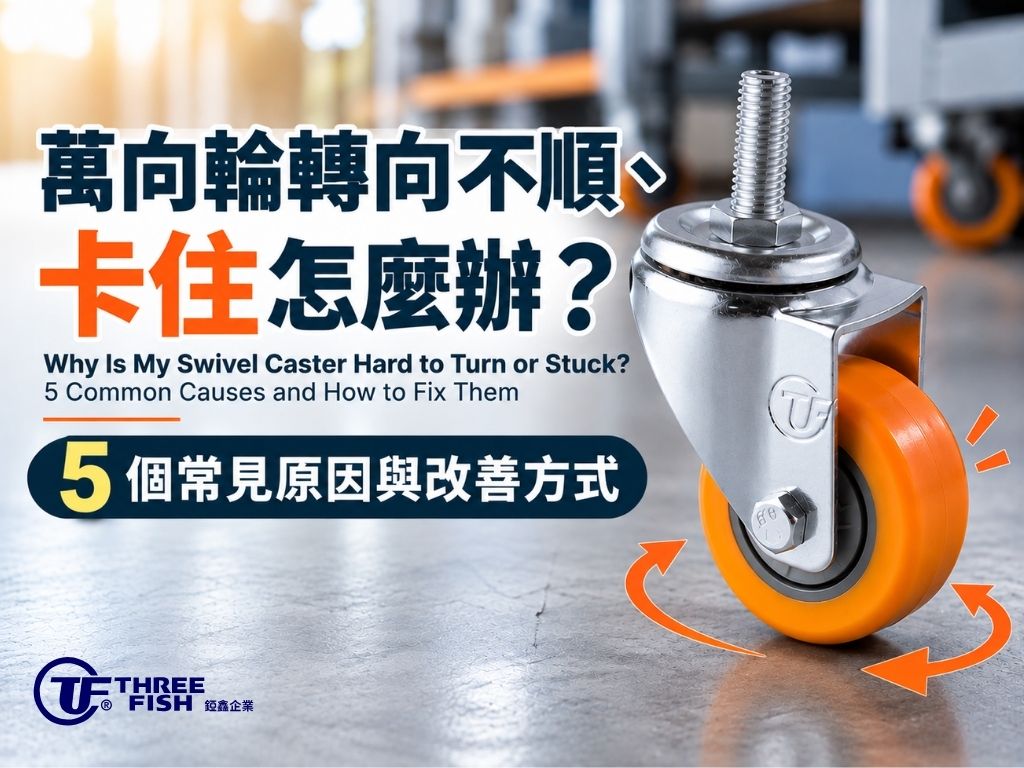
When swivel casters become stuck or fail to steer smoothly, the most common culprits include exceeding load capacity, debris entanglement, worn bearings or swivel structures, uneven installation, and a mismatch between caster specifications and the operating environment. If a trolley was initially easy to push but gradually became difficult to steer, you should prioritize checking for debris, wear and tear, and installation integrity. If it was hard to maneuver from day one, it is critical to re-evaluate whether the load capacity, wheel diameter, tread material, and overall caster configuration are truly suitable for the application.
Der Teng (TF Caster) has years of expertise in designing and manufacturing industrial casters, medical casters, specialty casters, and material handling equipment. In practice, whether a swivel caster rolls and turns smoothly is not solely determined by the "wheel" itself. It is a combined result of the caster's structure, the applied load, the installation method, floor conditions, and the working environment.
Therefore, when a swivel caster gets stuck, identifying the root cause before deciding to clean, adjust, maintain, or replace it is generally much more effective than blindly swapping out the caster.
Why Are Swivel Casters Not Turning Smoothly? 5 Common Causes
Abnormal swivel caster steering can generally be diagnosed by looking at five key areas: load capacity, debris, swivel structure, installation, and specification selection. Confirming the symptoms first and matching them to potential causes can save you from unnecessary dismantling or replacement.
| Common Causes | Common Symptoms | Suggested Solutions |
|---|---|---|
| Exceeding Load Capacity | Hard to turn when fully loaded; smoother when empty. | Re-evaluate total equipment weight against caster load ratings. |
| Debris Entanglement | Wheel stutters or specific sections refuse to rotate. | Clear out hair, strings, and floor debris. |
| Worn Bearings/Swivel Structure | Abnormal noises, catching points, or jerky steering. | Inspect the structural integrity and extent of wear. |
| Uneven Installation | A single specific caster struggles to turn. | Check mounting plates, bolts, and equipment frames for warping. |
| Mismatched Specifications | Always difficult to push, right from day one. | Reassess load, wheel diameter, material, and environmental fit. |
Cause 1: Insufficient Load Capacity Makes Casters Harder to Turn
When the actual weight of the equipment approaches or exceeds the caster's rated capacity, the pressure on the wheel and swivel structure spikes, significantly increasing rolling and steering resistance.
Caster load capacity evaluation cannot be based on the equipment's tare (empty) weight alone. For tool carts, logistics trolleys, machinery, or roll cages, the operational weight includes raw materials, parts, jigs, tools, and other cargo. Therefore, both the equipment body and the maximum cargo weight must be calculated together.
Equipment Tare Weight + Maximum Cargo Weight = Actual Total Operating Weight
Furthermore, even if equipment utilizes four casters, you cannot assume each caster perfectly bears 25% of the total load. If the equipment's center of gravity is off-center, the floor is uneven, or one caster is not making full contact with the ground, the weight will concentrate on the remaining casters. Over time, this uneven loading places immense stress on the swivel structure and wheel core.
How to Resolve Insufficient Load Capacity?
We recommend reconfirming the following parameters:
- Equipment tare weight
- Maximum cargo payload
- Total number of casters in use
- Equipment center of gravity
- Floor flatness
- Presence of impacts or other dynamic loads
If the equipment becomes noticeably easier to push when unloaded, you should immediately verify whether your current casters meet your actual load requirements. Der Teng (TF Caster) offers comprehensive series ranging from light-duty, medium-duty, and medium-heavy to heavy-duty and super-heavy-duty. Selection should be based on actual equipment conditions, not just the physical size of the caster.
Cause 2: Hair, Strings, and Debris Entanglement
If a swivel caster was functioning normally but suddenly becomes stuck or jerky, the first thing to check is whether debris has wrapped around the axle or bracket.
In factories, warehouses, medical facilities, or general operational environments, common debris that impedes caster performance includes:
- Hair
- Fine threads and fabric lint
- Plastic wrap and packaging straps
- Metal shavings
- Dust and machining swarf
These contaminants easily wrap around the wheel axle, gradually increasing rolling resistance. If dust, swarf, or pollutants penetrate the swivel raceway, they can also severely degrade the rotational smoothness of the swivel bracket.
How to Resolve Debris Entanglement?
First, move the equipment to a safe location, unload it appropriately, and ensure it is stable. Inspect the sides of the wheels, the axle, and around the swivel bracket. If entangled debris is found, clear it out, and then test the caster in this order:
Can the wheel roll normally? → Can the swivel bracket rotate smoothly? → Has normal pushing performance been restored?
If the equipment operates long-term in areas with high levels of dust, fibers, or shavings, anti-winding (thread guard) designs and environmental compatibility must be factored into your caster procurement.
Cause 3: Worn Bearings or Swivel Structures Create Catching Points
If the wheel rolls perfectly fine but the entire bracket struggles to pivot, the issue lies within the swivel structure itself, not the wheel tread.
Swivel casters rely on the raceway assembly above the bracket to change directions. After enduring long-term heavy loads, frequent steering, impacts, or harsh environments, these internal components inevitably wear down.
Common symptoms include:
- The cart tracks fine in a straight line but is extremely difficult to turn.
- The bracket catches or gets stuck at specific angles.
- Abnormal grinding or clicking noises during rotation.
- Jerky, discontinuous steering.
- Noticeable wobble or excessive play in the bracket.
- The wheel rolls smoothly, but the swivel bracket resists turning.
How to Tell if It's the Wheel or the Swivel Structure?
The wheel won't roll: Focus your inspection on the axle, wheel bearings, entangled debris, tread deformation, and overall wheel integrity.
The wheel rolls, but the bracket won't swivel: Focus on the swivel raceway structure, internal wear, bracket deformation, and raceway debris.
Separating the "rolling" function from the "swiveling" function makes it much easier to narrow down the root cause than simply concluding the entire caster is broken.
Will Adding Lubricant Fix a Stuck Swivel Caster?
Not necessarily. While applying appropriate lubrication to applicable grease fittings as part of routine maintenance can improve operation, it cannot magically restore components that are already heavily worn, deformed, or structurally damaged. Therefore, do not blindly add grease the moment a caster gets stuck; identify the root cause and consult the product's maintenance guidelines first.
Cause 4: Uneven Installation Leads to Steering Difficulty
If only one specific swivel caster is getting stuck while the others function perfectly, you should inspect the mounting surface, the bracket, and the equipment chassis.
A physically undamaged caster does not guarantee a proper installation state. Common installation issues include:
- Loose mounting bolts.
- Uneven mounting plates.
- Misaligned mounting holes.
- Warped or deformed equipment bottom frames.
- The caster bracket is bent due to external impact.
- The caster is not mounted at a perfect 90-degree angle to the floor.
Swivel casters must pivot naturally according to the equipment's direction of travel. If the mounting surface is tilted or the bracket is bent, it induces abnormal lateral stress, exponentially increasing steering resistance.
How to Resolve Installation Abnormalities?
- Verify that all mounting bolts are securely tightened.
- Ensure the mounting plate sits perfectly flush against the equipment.
- Inspect the bracket for any tilt or signs of impact damage.
- Check the equipment frame for warping or structural fatigue.
- Confirm that all casters make even contact with the floor simultaneously.
If the true issue stems from a warped equipment chassis, simply bolting on a brand-new swivel caster will likely result in the same failure shortly after. Always rule out installation flaws before replacing the caster.
Cause 5: Mismatched Caster Specifications Causes Immediate Resistance
If a swivel caster feels sluggish and heavy to steer immediately after installation—rather than degrading over time—you should immediately review your caster selection specifications.
The smoothness of a swivel caster depends not only on load capacity but also on the interplay between wheel diameter, tread material, bracket design, floor topography, usage frequency, and the operating environment.
| Selection Criteria | Impact on Operation |
|---|---|
| Load Capacity | Undersized specs lead to immediate structural overload. |
| Wheel Diameter | Dictates the ability to roll over floor joints and small obstacles. |
| Tread Material | Affects rolling resistance, acoustics, wear rate, and floor compatibility. |
| Bearings & Brackets | Directly govern rolling fluidity and steering agility. |
| Floor Conditions | Potholes, expansion joints, and debris drastically spike movement resistance. |
| Usage Frequency | High-frequency transport demands superior structural durability. |
| Operating Environment | Moisture, oil, dust, and extreme temperatures must dictate material choices. |
For example, smaller wheel diameters struggle to traverse floor joints, thresholds, or uneven surfaces. If the equipment itself is heavy, this combination will make operators feel like the cart is nearly impossible to push.
Different tread materials exhibit vastly different tribological properties. Der Teng offers a wide spectrum of materials, including PU, TPR, PA, and PP. Proper selection must balance equipment load, floor conditions, and the working environment, rather than defaulting to price or aesthetics.
How to Troubleshoot a Stuck Swivel Caster? 5 Steps to Resolve the Issue
When a swivel caster isn't steering smoothly, troubleshoot in this order: Debris → Load → Wheel/Swivel Structure → Installation → Specification Selection. Address the most obvious factors first before concluding that repairs or replacements are necessary.
Step 1: Clear Out Debris
Inspect the axle, the sides of the wheels, and the bracket clearance for hair, plastic wrap, strings, or machining swarf.
Step 2: Compare Loaded vs. Unloaded States
Remove the cargo and push the equipment again. If it operates noticeably smoother when empty, re-evaluate your caster load capacity and the equipment's weight distribution.
Step 3: Isolate Rolling vs. Steering
Verify independently whether the wheel rolls and whether the bracket swivels. They point to entirely different mechanical failures.
Step 4: Verify Installation Integrity
Check if mounting bolts, plates, brackets, or the equipment chassis are loose, misaligned, or warped.
Step 5: Reassess Caster Specifications
If there is no debris, no physical damage, and the installation is flawless—yet the cart is still exhausting to push—it is time to re-evaluate load capacity, wheel diameter, tread material, and environmental compatibility.
When Should You Replace a Swivel Caster?
When a caster exhibits structural wear, severe deformation, or physical damage, simple cleaning or maintenance will not solve the problem; replacement is mandatory.
Pay close attention to the following red flags:
- Severe tread wear or flat-spotting.
- Cracked or visibly deformed wheel cores.
- Tread delamination (peeling away from the core).
- Persistent grinding noises from the bearings.
- Bent or deformed metal brackets.
- Excessive play or wobble in the swivel raceway.
- Damaged or warped mounting plates.
- The caster remains jammed even after debris removal.
- Proper maintenance/lubrication fails to restore normal rotation.
For industrial trolleys, logistics handling equipment, or any high-frequency mobility carts, do not wait until the caster completely fails to address the issue. Diminished steering capability not only spikes operator fatigue but directly compromises directional control and overall handling efficiency.
How to Prevent Swivel Casters from Jamming Again?
The ultimate strategy for minimizing caster failure combines correct specification selection with routine preventative inspections.
In your daily operations, adhere to the following best practices:
- Never exceed the caster's rated load capacity for prolonged periods.
- Routinely clear debris from around the axles and brackets.
- Periodically verify that mounting bolts remain securely tightened.
- Monitor the treads for abnormal or uneven wear patterns.
- Listen for the onset of abnormal clicking or grinding noises.
- Initiate troubleshooting the moment steering resistance increases.
- Select tread materials strictly based on actual floor conditions.
- Establish a strict preventative maintenance schedule for high-frequency equipment.
For equipment on the move every single day, casters are not merely consumable attachments; they are critical components that directly dictate rolling resistance, steering agility, and operational efficiency.
Choose the Right Swivel Caster to Fix Steering Issues at the Source
A swivel caster that doesn't steer smoothly isn't always fundamentally broken. The root cause could be overloading, debris, worn bearings, installation flaws, or simply the wrong specifications for the job.
If the jamming started after a period of normal use, inspect for debris, wear, and installation issues first. If it was difficult to maneuver straight out of the box, re-evaluate your load capacity, wheel diameter, tread material, and environmental data.
Der Teng (TF Caster) provides an extensive portfolio of light-duty, medium-duty, medium-heavy, low-profile, heavy-duty, super-heavy-duty, and specialized casters. We help you evaluate the perfect fit based on equipment weight, floor conditions, and actual application demands.
If your trolleys, equipment, or machinery are plagued by sluggish steering, difficult pushing, abnormal noises, or frequent caster failures, contact Der Teng today. We will leverage your equipment specs and operating environment to engineer the optimal caster configuration for your needs.
FAQ | Common Questions About Swivel Casters
1. Is sluggish swivel steering related to the wheel material?
Yes, it can be. Tread material affects rolling resistance, grip, acoustics, wear resistance, and floor compatibility. However, steering agility is also heavily influenced by load capacity, wheel diameter, bearings, and the swivel bracket structure. If an undamaged caster remains hard to push, you must verify both the swivel structure and whether the tread material matches the floor and equipment profile.
2. Which is easier to push: 4 swivel casters, or 2 swivel + 2 rigid casters?
These configurations serve entirely different mobility needs. Four swivel casters offer maximum rotational agility, ideal for equipment that must change direction frequently or maneuver in extremely tight spaces. A setup of two swivel and two rigid casters excels at maintaining straight-line tracking over long distances. Base your choice on the cart's dimensions, transit routes, turning radius limits, payload, and operational style, rather than just asking which is "more agile."
3. The heavier the payload, the larger the wheel diameter I need, right?
Not necessarily. While larger wheels excel at rolling over expansion joints and small obstacles, a caster's true ability to handle heavy loads is dictated by its rated capacity and structural engineering. When selecting heavy-duty swivel casters, you must concurrently evaluate single-wheel load limits, wheel diameter, wheel width, tread material, bracket design, and floor conditions. Do not judge load capacity by wheel size alone.
4. Can I mix different materials or sizes of casters on the same trolley?
Generally, we strongly advise against mixing casters of different diameters, mounting heights, or load capacities without a thorough engineering evaluation. Discrepancies in caster height induce uneven load distribution, severely degrading pushing performance, steering, and stability. If a specialized application requires a mixed setup, you must first rigorously verify mounting heights, load distribution geometry, and overall chassis design compatibility.
Contact Der Teng (TF Caster) today. Provide us with your equipment weight, operating environment, floor conditions, and mobility requirements, and our team will help you architect the perfect caster configuration.
Contact Us